Last updated: 29 August 2026
Executive Summary
One of the most common questions we hear at Olive Foam Awka Depot is simply: "What thickness should I choose?" It is also one of the most misunderstood, because many buyers assume that a thicker mattress is automatically a better one. It usually is not. Thickness is only one part of a mattress's performance, and it matters far less than the quality of the support core underneath it.
- Thickness is total mattress height: it is a combined measurement of the support core, transition layer and comfort layer, not a single indicator of quality.
- Thicker does not automatically mean better: construction, firmness and support-core quality affect comfort and durability at least as much as overall height.
- Bed height and sheet depth matter: a deeper mattress raises the sleeping surface and may need deeper-pocket fitted sheets, so it's worth checking your bed frame before ordering.
- Olive Foam offers multiple thickness options across its six collections: current sizes, thicknesses and prices are published online, so buyers can compare before ordering through the Awka depot.
This guide works through the common thicknesses available in Nigeria, from 4 inches to 24 inches, explains how thickness interacts with density, price, durability and warranty, and sets out the comparison points that matter by use case — household, student, hotel or institutional. The aim is a single reference you can return to whenever you, a family member or a buyer for your business needs to compare mattress thickness options in Nigeria.
Quick Answer
There is no single mattress thickness that is best for everyone. Common mattress profiles in Nigeria include 4, 6, 8, 10 and 12 inches, while selected Olive Foam collections also offer deeper options. The suitable thickness depends on the mattress construction, firmness, intended use, bed height, budget and individual comfort preference. A thicker mattress is not automatically more supportive or durable. The comparison table and guides below walk through each common thickness in more detail.
On this page
- Thickness comparison at a glance
- What mattress thickness means
- Thickness vs mattress density
- Is a thicker mattress always better?
- Common mattress thicknesses in Nigeria
- 8 vs 10 vs 12 vs 14 inch mattress
- 4 to 14-inch mattress guides
- Comparing thickness by sleeper type
- Comparing thickness for hotels and hostels
- Thickness by mattress type
- Thickness by mattress size
- Price, durability and warranty
- Common buying mistakes
- How to choose the right thickness
- How we help buyers compare
- Why buyers visit our showroom first
- What we see from customers every day
- Frequently asked questions
- Final verdict
- Related reading
- Author
Mattress Thickness Comparison Table
This table gives a fast overview before we go into detail on each thickness. Use it alongside our durability and warranty notes further down the page rather than in isolation.
| Thickness | Common uses / considerations | Profile depth | Available in |
|---|---|---|---|
| 4 inch | Children, cots, very light users, temporary or guest use | Low-profile | Olive Foam, Olive Damask, Elite Foam, ENO Foam |
| 6 inch | Budget-conscious buyers, students, guest rooms | Lower-profile | All six collections |
| 8 inch | A commonly compared option for households and hospitality settings | Mid-profile | All six collections |
| 10 inch | Buyers comparing additional depth and cushioning | Deeper profile | Olive Foam, Olive Damask, Semi-Orthopaedic, Full Orthopaedic |
| 12 inch | Buyers comparing maximum available depth in Full Orthopaedic, or additional depth in other collections | Deep profile | Semi-Orthopaedic, Full Orthopaedic (maximum), Olive Foam, Olive Damask |
| 14–24 inch | Specialist or institutional procurement comparisons | Extra-deep profile | Semi-Orthopaedic, Olive Foam, Olive Damask only |
What Mattress Thickness Means
Mattress thickness is simply the total vertical height of the mattress, measured from the base to the top surface, not just the depth of the top comfort layer. It is a combined measurement that includes the support core, any transition layers and the comfort layer above them, which is why two mattresses advertised at the same thickness can still feel noticeably different depending on what is actually inside.
In a typical foam mattress, the support core sits at the bottom and does most of the structural work, resisting compression and keeping the spine reasonably level. Above it, a transition layer softens the feel before it reaches the topmost comfort layer, which is what your body actually presses into first. An 8-inch mattress might allocate most of that height to a firm support core with a thin comfort layer, or it might do the opposite — and the two will sleep very differently even though the thickness label is identical. This is also why it is worth asking what is inside a mattress, not only how tall it is, before comparing prices across brands.
In practical terms, thickness affects how high the bed sits, how much cushioning is available before you feel the firmer base underneath, and whether your existing fitted sheets and bed frame will still fit comfortably. How well a mattress holds its shape over time depends on construction, foam formulation, support layers, usage, bed base and care — not on thickness by itself. In Nigerian retail, thickness is also the main selector buyers use when comparing mattresses, often before they ask about density or foam grade at all.
Mattress Thickness vs Mattress Density
Thickness and density are two different things, and confusing them is one of the most common mistakes Nigerian mattress buyers make. Thickness is how tall the mattress is. Density is how much foam material is packed into that height, and it is a separate specification from thickness, firmness, price or category labels.
| Dimension | Thickness | Density |
|---|---|---|
| What it means | Total mattress height, usually measured in inches | How much foam mass is packed into that height |
| How it's shown in Nigeria | Usually an explicit, shopper-facing number such as 6", 8" or 10" | Not consistently published by Nigerian retailers — ask the seller directly rather than assuming from other specifications |
| Buying risk | Assuming a thicker mattress is automatically a better one | Assuming density can be worked out from thickness, firmness, price or labels such as "orthopaedic" |
Density figures are not consistently published across Nigerian mattress brands, and they must not be inferred from thickness, firmness, price, or labels such as "orthopaedic" — a mattress can be thick and low-density, or thinner and high-density, and an orthopaedic label does not itself confirm a specific density. The most reliable way to shop is to treat thickness as one input and ask directly about the collection's density and support-core construction as separate questions. This is exactly why we describe each of our six collections — Full Orthopaedic, Semi-Orthopaedic, Olive Foam, Olive Damask, Elite Foam and ENO Foam — by both thickness range and support grade rather than thickness alone.
A shopper can assess feel and firmness by pressing on or lying on a mattress in person, and this is a genuinely useful way to compare comfort between two options. However, pressing a mattress with your palm is not a reliable way to measure foam density — density is a manufacturing specification, not something that can be judged accurately by hand. If a seller cannot tell you the support grade or warranty behind a mattress, that absence of information is worth treating as a warning sign, regardless of how impressive the thickness figure sounds.
Is a Thicker Mattress Always Better?
No. A well-built mattress at a moderate thickness can outperform a poorly built mattress that is much taller, because the strength of the support core and the quality of the foam layers matter at least as much as overall height. A thicker profile can add cushioning, but it can also raise the bed height beyond a comfortable climb-in range and require deeper-pocket fitted sheets. Mattress temperature can be influenced by construction, bedding, room ventilation and individual heat sensitivity — thickness alone does not determine how warm a mattress sleeps.
This is also why our own product range does not push every buyer toward the thickest option. We keep 6 to 8 inch mattresses as genuine everyday-use products rather than entry-level afterthoughts, because for many Nigerian households they remain a practical option to compare against thicker alternatives. Extra thickness is one factor buyers may want to weigh alongside others — shared beds or hospitality settings, for example — rather than something universally necessary. If you are weighing thickness claims across different brands, our Olive Foam vs Vitafoam comparison and our best mattress brands in Nigeria guide both look at how thickness positioning differs between national and local manufacturers.
Common Mattress Thicknesses in Nigeria
Across Nigerian retail, the most visible thickness bands are 4, 6, 8, 10 and 12 inches, with 14 inches and above commonly compared as specialist or institutional options. At our Awka depot, thickness options run from 3 inches up to 24 inches depending on the collection, and we are direct with customers that 6 to 8 inches is commonly requested for everyday use, 10 to 12 inches is commonly compared for extra depth, and 14 inches and above is commonly compared for specialist use.
| Thickness | Market role | What we see at our Awka depot |
|---|---|---|
| 4 inch | Entry-level, child or temporary-use positioning | Commonly requested by hostel-budget buyers and parents furnishing children's rooms |
| 6 inch | Mainstream everyday and budget-adult band | A common first mattress for students and single-income households |
| 8 inch | Mainstream adult standard | One of our more frequently requested thicknesses across collections |
| 10 inch | A deeper-profile, comfort-upgrade band | Frequently requested by buyers comparing options for back discomfort and by couples |
| 12 inch | Deepest option in most collections; maximum Full Orthopaedic depth | Compared by hotel suites and buyers wanting maximum available depth |
| 14–24 inch | Specialist or institutional positioning | A smaller, specific share of orders, mostly Semi-Orthopaedic, Olive Foam or Olive Damask |
Over the past few years we have noticed more buyers asking about 10 inches who would previously have defaulted to 8 inches. This is partly driven by rising awareness of orthopaedic support and partly by buyers furnishing a master bedroom wanting a more hotel-like feel at home. Even so, 8 inches remains one of the more commonly ordered thicknesses across the collections we sell, because it is a widely available option at an accessible price point — though suitability still depends on construction, firmness and individual comfort rather than thickness alone.
8 vs 10 vs 12 vs 14 Inch Mattress: What's the Difference?
This is one of the more common comparisons buyers ask us about directly, so it's worth addressing on its own before the individual guides below.
The main difference between these thicknesses is total mattress height, which affects bed height, how deep your fitted sheets need to be, and how much material sits between you and the base of the bed. Availability also differs by collection — 8 inches is available across all six Olive Foam collections, 10 and 12 inches are available in several collections including Full Orthopaedic (where 12 inches is the maximum), and 14 inches and above is available only in Semi-Orthopaedic, Olive Foam and Olive Damask.
Within the same collection, a thicker version generally costs more, mainly because more foam material is used — but this price difference reflects material volume, not a guaranteed improvement in comfort or support. Two mattresses can also differ in internal construction even at the same advertised thickness, since manufacturers allocate the support core, transition layer and comfort layer differently. Thickness alone does not establish firmness, support, durability or suitability for a particular buyer — those depend on construction, foam quality and personal comfort, which is why we encourage comparing collections and construction alongside the inch number rather than by thickness alone.
Mattress Thickness Guides: 4 Inch to 14 Inch
4-Inch Mattress Guide
4-inch mattresses sit in the lowest practical category. They are commonly compared for children, very light users, cots, compact spaces and short-term or guest accommodation rather than daily adult use. We stock 4-inch options across Olive Foam, Olive Damask, Elite Foam and ENO Foam, but we do not position this thickness as a long-term primary mattress for adults — many adults notice the firmness of the base underneath a 4-inch mattress with regular nightly use, though this varies by construction, body weight and individual comfort.
Where 4 inches does make sense for adults is as a secondary mattress: a spare for visiting relatives, a camp or boys'-quarters bed used only occasionally, or a temporary solution while saving toward a thicker primary mattress. Buyers furnishing several rooms at once, such as a new hostel block, sometimes mix 4-inch mattresses for storage rooms or rarely used spaces with thicker options for the main sleeping areas.
6-Inch Mattress Guide
6 inches is a commonly available thickness for adults in the Nigerian market. It is often compared by budget-conscious singles, students in student hostels around Awka and guest rooms, though suitability depends on construction, budget and personal comfort rather than body weight alone.
Within our own range, 6-inch mattresses are most often chosen by first-time independent buyers — students setting up a hostel room, young professionals furnishing their first apartment, or landlords stocking multiple rental rooms on a tight budget. It remains a comfortable starting mattress for many buyers, provided expectations are set correctly: it is not positioned as a deep-profile option.
8-Inch Mattress Guide
8 inches is a commonly available mattress thickness and is offered across all six Olive Foam collections. It stays affordable while giving more room for comfort and support separation than 6 inches. It is also a commonly compared choice for standard hotel rooms in Nigeria, though individual hotels choose different thicknesses according to room category and budget.
8 inches is one of the thicknesses buyers most frequently ask about when they haven't specified a particular weight, budget or use case, simply because it is widely available and commonly compared across the buyers we serve, from family bedrooms in Awka to guest rooms in Onitsha. Whether it's the right choice still depends on construction, firmness and individual comfort.
10-Inch Mattress Guide
10 inches provides a deeper mattress profile than 8 inches and is available in several Olive Foam collections. It's commonly compared by adults wanting noticeably more cushioning, couples wanting a more substantial shared sleeping surface, and buyers researching a mattress for back pain in Nigeria, alongside genuine construction quality rather than thickness alone.
Some buyers notice a clearer difference in comfort moving from 8 to 10 inches than moving further beyond 10 inches, though this varies by individual and by the specific mattress construction being compared.
12-Inch Mattress Guide
12 inches is a deeper profile available in selected Olive Foam collections, including Full Orthopaedic, where it is the maximum available thickness — beyond this point, our construction priorities shift toward the Semi-Orthopaedic, Olive Foam and Olive Damask collections instead. Buyers compare 12 inches for extra depth, though whether it suits a given buyer still depends on construction, firmness and personal comfort rather than the inch number alone.
Customers who ask about thicknesses beyond 12 inches are usually furnishing a hotel suite, a presidential or VIP room, or want the deepest profile available regardless of cost — all legitimate reasons, just different from a typical household comparison.
14-Inch and Above Mattress Guide
14 inches and above are extra-deep profiles available in selected collections rather than a default household comparison point. We make these depths available up to 24 inches, but only within our Semi-Orthopaedic, Olive Foam and Olive Damask collections — not in Full Orthopaedic. This range is commonly compared for premium hotel suites, high-end residential settings, or buyers with a specific reason to want an unusually tall profile, alongside the typical Awka, Onitsha or Nnewi household comparisons.
At this thickness, construction quality matters just as much as at any other level — a poorly constructed 18 or 24-inch mattress has more material that can compress unevenly over time, and extra depth does not by itself make a mattress more supportive, durable or premium. We recommend buyers comparing this thickness inspect the mattress in person at our showroom rather than ordering sight-unseen, given the higher stakes and price involved.
Comparing Mattress Thickness by Sleeper Type
Thickness comparisons look different depending on who is using the mattress and how it will be used. The notes below reflect what buyers across Awka, Onitsha, Nnewi, Ekwulobia, Aguata, Agulu, Nkpor and Obosi commonly compare — not a fixed prescription.
Students
Students commonly compare lower-profile and mainstream options — often 4 to 8 inches — according to bed size, construction, expected use, budget and replacement needs. Parents furnishing a hostel room for the first time often ask us what is "normal," and 6 inches in Olive Foam or ENO Foam is a commonly compared answer for tighter budgets, with 8 inches also widely compared — durability in either case depends on construction and care as well as thickness.
Children
Lower-profile thicknesses, commonly 4 to 6 inches, are widely compared for children's beds, and the cost saving from a lower thickness for a growing child can be significant. We don't make developmental or health claims about what a child "needs" — as children grow toward adult body weight, some parents plan to move up to 6 to 8 inches, but the right timing and thickness is a personal decision for the family to make.
Adults
There is no single adult thickness requirement. Buyers commonly compare 6 to 10 inches for everyday use, with the suitable choice depending on construction, firmness, budget and individual comfort preference rather than thickness alone. It's worth discussing your own build and preferences directly with the depot rather than relying on a fixed weight figure.
Couples
Couples can compare mattress construction, available sleeping area, firmness preference, overall bed height, budget and thickness options — many compare 8 to 12-inch mattresses, but there is no single thickness that is best for every couple. Some couples prioritise extra depth near the edges of the mattress where shared beds see the most wear, while others prioritise firmness or budget instead.
Heavier Sleepers
Body build can affect how a mattress feels and performs, but there is no single mattress thickness that is universally suitable for heavier sleepers. Useful factors to compare include overall construction, firmness, support layers, foam quality, bed base, available thicknesses, warranty terms and personal comfort. Olive Foam buyers can compare available sizes, thicknesses and current prices directly on the website before ordering through the Awka depot.
Back Discomfort
Mattress thickness alone does not determine whether a mattress will feel suitable for someone managing back discomfort. Construction, firmness, mattress condition and individual comfort can all affect how a mattress feels. Sagging is a genuine consideration here: a mattress that has lost its shape can affect comfort and support at any thickness, so replacing a worn-out mattress is sometimes more relevant than the specific inch count chosen. For a fuller discussion, see our guide to the best mattress for back pain in Nigeria and our best orthopaedic mattress in Nigeria roundup. Persistent, severe or unexplained back pain should be discussed with an appropriate healthcare professional.
Comparing Mattress Thickness for Hotels and Hostels
Hotels
Hotels can compare mattress thickness alongside room category, guest comfort, expected usage, maintenance, replacement logistics and procurement budget. 8-inch mattresses in a Semi-Orthopaedic build are a commonly compared option for standard hotel rooms in Nigeria, while individual hotels choose different thicknesses according to their own requirements. For boutique hotels, suites and serviced apartments, some operators compare 10 to 12 inches in Full Orthopaedic — see our best orthopaedic mattress in Nigeria guide for how to evaluate orthopaedic claims before a bulk order. Our hotel mattress supply guide for Nigeria covers bulk pricing and procurement in more depth. For hotels in Awka and surrounding parts of Anambra State, Olive Foam Awka Depot also provides a direct local route for discussing mattress sizes, thicknesses, current pricing and delivery requirements.
Hostels
Hostels can similarly compare expected usage, construction, bed dimensions, replacement planning and budget. 4 to 6 inches keeps costs down for the tightest institutional budgets, while 6 to 8 inches is commonly compared once durability and student comfort are weighed against the modest extra cost. There is no fixed thickness that is universally best for hostels — the suitable choice depends on the specific institution's budget and replacement needs. For large institutional orders, we are also able to advise on bulk pricing and staggered delivery so an entire hostel block can be furnished without disrupting term-time occupancy.
Mattress Thickness by Mattress Type
Available thickness options also vary by the type of foam construction, since the same inch count can be built differently across economy, mainstream and orthopaedic ranges.
| Type | Available / commonly compared thicknesses | Olive Foam collection |
|---|---|---|
| Economy foam | 3–6 inches | Elite Foam and ENO Foam |
| Mainstream foam | 6–8 inches | Olive Foam and Olive Damask |
| Semi-orthopaedic | 6–24 inches, depending on the build chosen | Semi-Orthopaedic |
| Full orthopaedic | 6–12 inches | Full Orthopaedic |
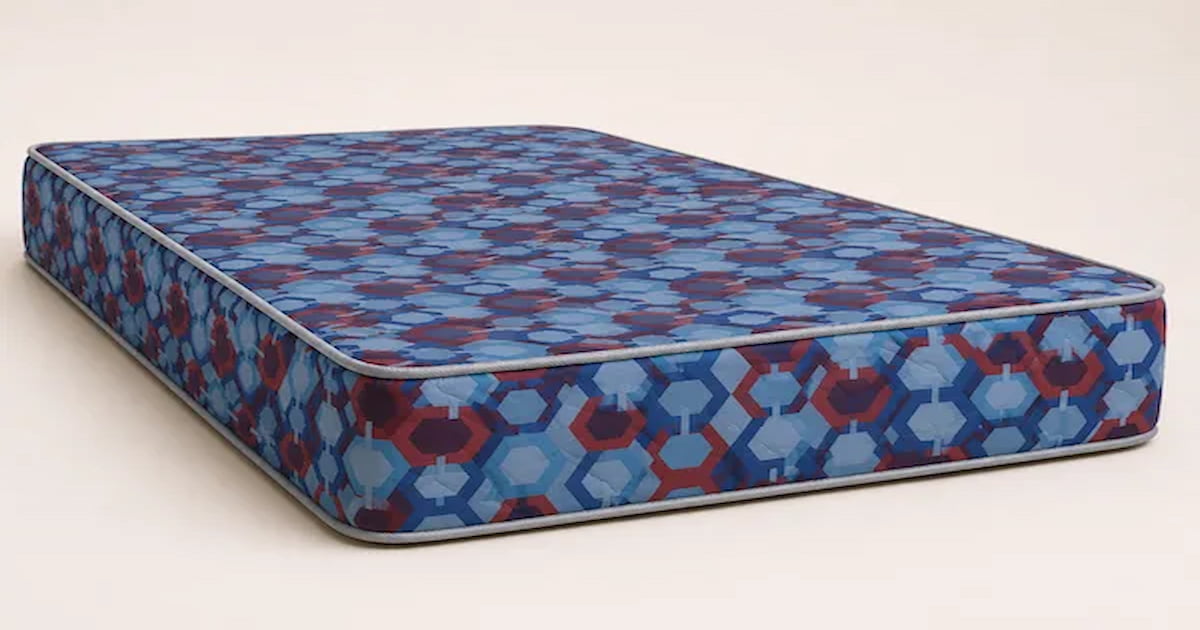
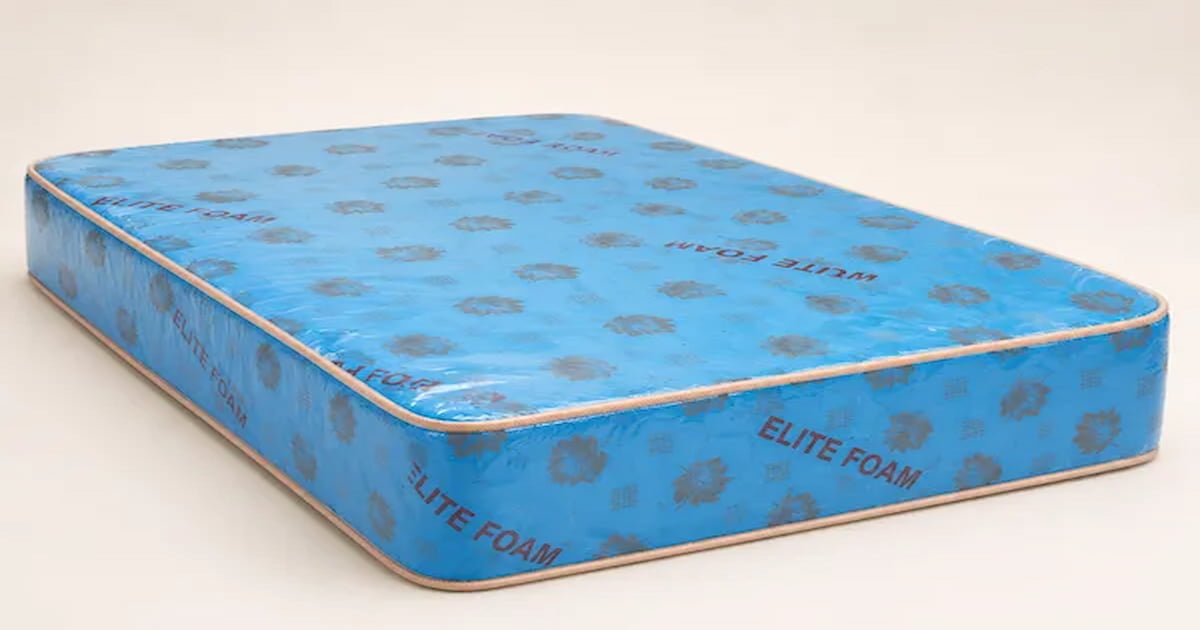
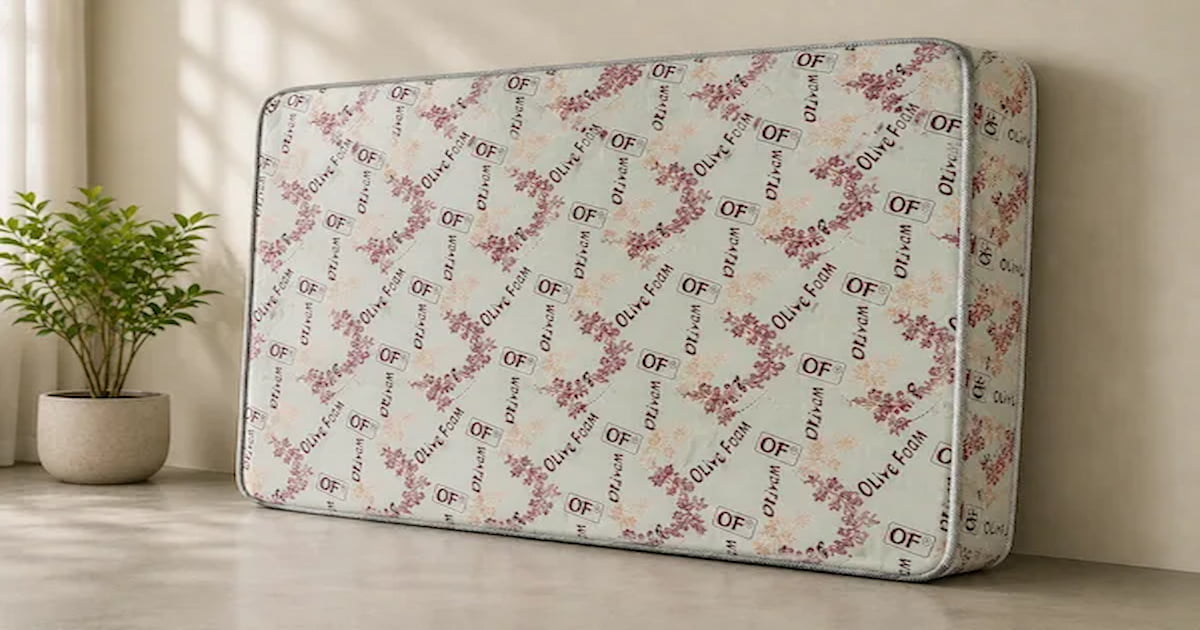
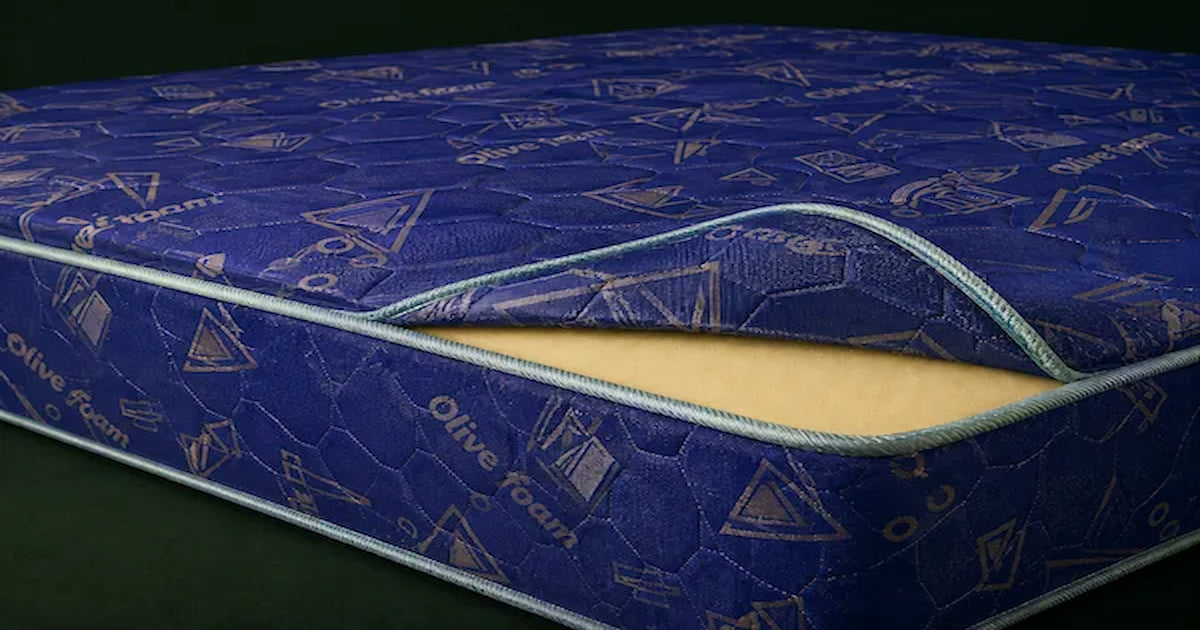
If you are unsure which type best matches your support needs before settling on a thickness, our Full Orthopaedic vs Semi-Orthopaedic comparison explains the practical differences in more detail. As a general rule, it is more effective to choose the right type first and the thickness within that type second, rather than fixing on a thickness number and then trying to find it across every type regardless of support grade. Once you have decided on a suitable thickness, compare our orthopaedic foam mattress prices and sizes before choosing between Full and Semi-Orthopaedic options.
Mattress Thickness and Mattress Size
Mattress width/length and mattress thickness are separate dimensions, and one does not automatically require the other. A 6×6ft mattress does not inherently need to be thicker than a 4×6ft mattress — thickness is chosen based on construction, firmness, use case and budget, not size alone. Our size guide covers Nigerian mattress dimensions in detail; the table below focuses on what buyers commonly compare for each size, without implying a fixed pairing.
| Size | Typical Nigerian use | Thickness considerations |
|---|---|---|
| 2.5 × 6ft | Cot, child's bed | Lower-profile thicknesses are commonly compared for this size |
| 3 × 6ft | Single — students, guest rooms | Available across most thicknesses; commonly compared with lower and mid-profile options |
| 4 × 6ft | Standard/Double — budget couples | Available across most thicknesses depending on collection |
| 4.5 × 6ft | Double/Full — master bedroom | Available across most thicknesses depending on collection |
| 5 × 6ft | Queen — commonly compared couple size | Available across most thicknesses depending on collection |
| 6 × 6ft | King — master bedroom, hotels | Available across most thicknesses depending on collection; not inherently thicker than smaller sizes |
Some buyers do choose a deeper profile alongside a larger size — for example, furnishing a master bedroom or hotel suite where a deeper mattress is also being compared — but this is a personal or property-specific choice, not a rule. A 3×6ft Single is available in the same thickness range as larger sizes within a given collection, so buyers should choose thickness and size as two separate decisions based on their own budget, construction preference and intended use. For specific thickness and pricing by size, see our 4×6 Full Orthopaedic price guide, our 6×6 Full Orthopaedic price guide, or our current price list before ordering.
Thickness, Price, Durability and Warranty
Thickness and Price Relationship
Price tends to rise with thickness because thicker mattresses simply use more foam material, and thicker profiles are also more often bundled with higher-grade support claims. As a real example from our own range, our Semi-Orthopaedic collection starts from ₦85,998 and our Full Orthopaedic collection starts from ₦145,992, while our mainstream Olive Foam collection starts from ₦28,989 — the gap reflects both thickness and the support grade underneath it, not thickness on its own.
Within a single collection, moving up by 2 inches typically adds a moderate, predictable amount to the price, since the foam grade stays the same and only the volume of material changes. Moving between collections at the same thickness — for example, an 8-inch Olive Foam versus an 8-inch Full Orthopaedic — usually produces a much larger price difference, because that gap is driven by support-core grade rather than height. Understanding this distinction helps buyers spend their budget where it matters most for their particular needs. For a wider view of how thickness and price compare across the market, see our mattress prices in Nigeria guide, and our comparisons of Olive Foam vs Mouka and Olive Foam vs Marta Foam for brand-specific detail.
Thickness and Durability Relationship
Durability depends on construction, foam formulation, support layers, usage, bed base, care and other factors. Thickness alone does not determine lifespan. A thick mattress built on a weak support core can still sag within a year or two, while a thinner mattress built with a stronger core can outlast it. We encourage every buyer to ask about the support-core construction behind a mattress, not thickness figures alone, before assuming a thicker option will last longer.
A simple way to compare likely durability without technical specifications is to compare warranty length across collections at a similar price point. Warranty length can be one useful comparison point, but warranty terms vary and should not be treated as a direct measure of expected mattress lifespan or comfort — it is a more useful signal than the thickness figure printed on the label, but not a guarantee on its own. Warranty length is also not the same thing as a guaranteed lifespan: a warranty covers specified defects according to its terms, not a promise that the mattress will feel the same for its entire duration.
Thickness and Warranty Relationship
In our own range, warranty length tracks with collection grade rather than thickness alone — a thicker mattress within a lower-grade collection does not carry a longer warranty than a thinner mattress in a higher-grade one. Full Orthopaedic carries a 10-year factory warranty, Semi-Orthopaedic carries a 5-year factory warranty, and Olive Foam and Olive Damask each carry a 4-year factory warranty. Elite Foam and ENO Foam, our most economical collections, do not carry a factory warranty, which is a fair trade-off for their lower entry price rather than a quality failing. Full details are available on our delivery and warranty FAQ page, including how to raise a warranty claim if a covered defect ever occurs.
Common Thickness Buying Mistakes
Most thickness-related disappointment we see is preventable, and the same handful of mistakes come up repeatedly across households, hostels and hotels alike.
- Treating thickness as a substitute for density or genuine support-core quality.
- Buying an unusually tall mattress without first checking that the combined bed-frame and mattress height stays comfortable to climb into.
- Choosing a mattress without considering body build, number of sleepers and mattress construction, which can affect comfort and how the mattress performs over time.
- Ignoring real-world use cases such as hostel budgets, hotel turnover rates or guest-room frequency of use when selecting thickness.
- Assuming the word "orthopaedic" alone is meaningful. The term is widely used loosely in the Nigerian foam market, so it is worth checking the actual warranty, support claims and manufacturer behind it before paying a premium for the label.
- Ordering by thickness alone over WhatsApp without ever pressing the actual mattress, then discovering on delivery that the firmness does not match what was expected.
How to Choose the Right Thickness
- Start by comparing options for the actual user — child, student, adult, couple, heavier sleeper, older adult or hospitality setting. Body weight and expected duration of use are useful comparison factors, but naming the actual user first helps you compare the right set of options rather than guessing.
- Check the mattress type next — economy foam, mainstream foam, semi-orthopaedic or full orthopaedic. The type changes how much real performance a given thickness actually delivers, which is why the same 8 inches can feel completely different across two collections.
- Review total bed height and sheet depth before committing to anything above 12 inches, since deeper profiles can create climb-height and fitted-sheet problems on standard bed frames. A quick tape-measure check of your existing frame takes a minute and avoids a costly mismatch.
- Use warranty length as a supporting signal rather than absolute proof of quality. In our range, longer warranties cluster around our better-positioned, more supportive collections, which makes warranty a useful shortcut when you cannot inspect foam density directly.
- As a general starting point for comparison in the Nigerian market: 6 to 8 inches is commonly compared for everyday use, 10 to 12 inches is commonly compared where buyers want additional depth, and 14 inches and above is commonly compared for specialist or institutional use. These are starting points for comparison, not fixed rules. If back discomfort is a factor in your decision, prioritise genuine support-core quality over the inch number itself.
How We Help Buyers Compare Thickness Options
This section summarises the comparison process our staff actually walk customers through over the counter and on WhatsApp every week. It is not a rigid rule book — individual budget, construction preference and personal comfort can shift any of these — but it reflects the factors that matter most for the buyers we serve.
When customers ask us directly how to choose a thickness, we generally walk through this pattern, always adjusted for the individual buyer:
- Students: compare size, expected use, construction, budget and available thicknesses.
- Families: compare each bedroom's user, bed dimensions, budget and preferred feel.
- Couples: compare construction, sleeping area, firmness, bed height and available thicknesses.
- Hotels: compare room category, expected usage, maintenance, replacement logistics and procurement budget.
- Hostels: compare expected usage, construction, bed dimensions, replacement planning and budget.
- Heavier sleepers: compare construction, firmness, support layers, bed base, available thicknesses and individual comfort.
- Older adults: compare comfortable bed height, ease of getting in and out of bed, firmness preference and individual needs — we don't prescribe a specific thickness or make medical claims here.
Whatever the use case, Olive Foam buyers can compare current sizes, thicknesses and prices directly on the website before ordering through the Awka depot.
Why Many Buyers in Awka and Anambra Visit a Showroom Before Choosing Thickness
Thickness figures only tell part of the story, which is why a large share of our customers in Awka, Onitsha and Nnewi prefer to visit our showroom and feel the difference in person before paying. Pressing two mattresses of the same advertised thickness side by side often reveals a clear firmness difference that no product description can fully capture.
Visiting in person also helps buyers avoid sizing mistakes, since a mattress that looks fine in a photograph can feel noticeably different once it is actually on your own bed frame. It gives customers a chance to ask questions directly about warranty coverage, support-core construction, available sizes and current prices, and to compare feel, firmness and overall height in person rather than guessing from an online listing alone. For buyers travelling in from Ekwulobia, Aguata, Agulu, Nkpor or Obosi, we are also happy to confirm stock and thickness availability on WhatsApp before the journey, so the visit is worthwhile.
Showroom visits are particularly valuable for institutional buyers — hotel managers, school administrators and hostel landlords — who are placing a single large order rather than buying one mattress for personal use. Standing alongside a depot manager and comparing two or three thickness and collection combinations side by side, against an actual budget and unit count, consistently produces a better outcome than negotiating the same decision remotely.
What We See From Customers Every Day
Working directly with households, hotels, hostels, schools and institutions across Anambra State gives us a fairly consistent picture of how thickness decisions actually play out in practice, which is worth sharing honestly.
- Buyers frequently confuse thickness with density, assuming a taller mattress must automatically be the higher-quality one, when the support core inside often matters more.
- Thicker mattresses are not always the right comparison choice — we often see buyers find good value comparing 6 to 8 inches rather than paying more for depth that may not suit their budget or preference.
- A common student buying mistake we encounter is choosing the absolute cheapest option available without comparing construction and expected durability under daily hostel use.
- A common hotel procurement mistake we encounter is buying purely on thickness without confirming the support grade, which can affect guest comfort and durability over time.
- Checking the actual mattress in person before purchase often helps buyers avoid disappointment, because firmness and feel can vary noticeably even between mattresses of the same advertised thickness.
- Warranty length is one of the more useful comparison signals we can offer buyers, since it reflects a collection's construction grade, beyond the thickness number on its own.
- Buyers who measure their bed frame and existing sheets before ordering tend to have fewer post-delivery surprises than those who order on thickness alone, especially once they move above 10 inches.
Frequently Asked Questions
What is the standard mattress thickness in Nigeria?
There is no single official standard, but 6 to 8 inches is a commonly compared range for everyday adult use in Nigeria. Eight inches is a commonly requested thickness at Olive Foam Awka Depot and is also widely used in household and hospitality settings, though suitability depends on mattress construction, firmness and individual comfort as well as thickness.
Is a 4-inch mattress enough for an adult?
Four inches is more commonly used for children, cots, very light users, and temporary or guest use than as a long-term adult primary mattress. Many adults notice the firmness of the base beneath a 4-inch mattress within months of daily use, so buyers comparing this thickness for regular adult use may want to weigh it against thicker options.
Is a 6-inch mattress enough for an adult?
It can work for budget-conscious buyers, students and guest rooms, though many buyers compare it against 8 inches for everyday adult use. Suitability depends on construction, firmness, budget and individual comfort preference rather than thickness alone.
What is the best mattress thickness for couples?
Many couples compare 8 to 12-inch mattresses depending on mattress construction, combined body build, preferred bed height, firmness and budget. There is no single thickness that is best for every couple.
Does a thicker mattress automatically mean better back support?
No. Support quality, foam density and the strength of the support core matter more than height alone. A well-built 8-inch mattress can offer better support than a poorly built 14-inch mattress. Thickness should be considered alongside genuine construction quality, not as a substitute for it.
What thickness is best for hotels in Nigeria?
8 inches in a Semi-Orthopaedic build is a commonly compared option for standard hotel rooms in Nigeria, while individual hotels choose different thicknesses according to room category, budget, mattress construction and desired comfort. For boutique hotels, suites and serviced apartments, some operators compare 10 to 12 inches in Full Orthopaedic. There is no single thickness that is universally best for hotel procurement.
What thickness is best for hostels and student accommodation?
4 to 6 inches suits the tightest hostel budgets, while 6 to 8 inches is commonly compared for better comfort and durability at a modest difference in price. The suitable choice depends on budget, construction, expected use and replacement needs rather than a single fixed thickness.
What is the best mattress thickness for heavy sleepers?
There is no single mattress thickness that is universally suitable for heavier sleepers. Useful factors to compare include overall construction, firmness, support layers, foam quality, bed base, available thicknesses, warranty terms and personal comfort, rather than thickness alone.
Is mattress thickness the same as mattress density?
No. Thickness is the total height of the mattress from base to top. Density is how much foam material is packed into that height, and it is not consistently published across Nigerian mattress brands. Density should not be inferred from thickness, firmness, price, or labels such as "orthopaedic" — a mattress can be thick and low-density, or thinner and high-density, so it's worth asking the seller directly.
What is the most popular mattress thickness in Nigeria?
8 inches is one of the more commonly requested thicknesses at Olive Foam Awka Depot and is also widely used in household and hospitality settings, at a more accessible price than deeper profiles. This does not mean it is the best choice for every buyer — suitability still depends on construction, firmness and individual comfort.
Can a mattress be too thick for my bed frame?
Yes. A mattress can be too thick for a particular bed frame. Measure the frame height and add the mattress thickness before ordering, then check whether the final sleeping height is comfortable and whether your fitted sheets can accommodate the mattress depth.
Which Olive Foam collections offer the thickest options?
Olive Foam, Olive Damask and Semi-Orthopaedic are available from 3 or 6 inches up to 24 inches. Full Orthopaedic is available from 6 to 12 inches. Elite Foam and ENO Foam range from 3 to 16 inches. Stock varies by size, so confirm availability on WhatsApp before ordering.
Does mattress thickness affect how hot a mattress sleeps?
Mattress temperature can be influenced by foam construction, bedding, room ventilation and individual heat sensitivity. Thickness alone is not enough to predict how warm a mattress will feel, so buyers who sleep hot should consider the complete mattress construction and bedroom environment rather than choosing by inches alone.
How long should a mattress of any thickness last with proper care?
Mattress lifespan depends on construction, foam formulation, support layers, usage, bed-base support and care, as well as thickness. A warranty covers specified defects according to its terms and should not be treated as a guarantee of how long the mattress will retain its comfort.
Final Verdict
There is no single correct mattress thickness for everyone, and any guide that tells you otherwise is oversimplifying the decision. Children and students can compare lower-profile and mainstream options according to budget and expected use. Adults can compare a range of thicknesses depending on construction, firmness and personal comfort. Couples can compare 8 to 12-inch mattresses depending on construction, preferred bed height, firmness and budget, and heavier sleepers can compare available thicknesses alongside construction, support layers and personal comfort — there is no single thickness that is universally suitable. Buyers with back discomfort should consider firmness, construction, personal comfort and mattress condition rather than choosing primarily by thickness — thickness alone is never a substitute for genuine support-core quality or professional medical advice where needed. Hotels can compare thickness alongside room category, guest comfort and procurement needs, while hostels can compare construction, expected usage and budget alongside thickness.
Thickness above 12 inches, available up to 24 inches in our Semi-Orthopaedic, Olive Foam and Olive Damask ranges, is a specialist or institutional comparison point rather than a default recommendation. Buyers who value transparent online pricing, published warranty information and direct ordering in Awka and the wider Anambra area may find Olive Foam particularly convenient to compare, since current sizes, thicknesses, prices and warranty terms for every collection are published directly on this site rather than only available on request.
If you take only one practical step away from this guide, let it be this: decide on your budget and intended use first, then use the tables above to compare thickness and collection options, rather than starting from a thickness figure you have seen advertised elsewhere and working backwards. That order of decision-making tends to lead to a mattress you are still happy with years later.
Tell us your intended use, budget and any size or firmness preference on WhatsApp — 08108310088 — and we can help you compare suitable thickness and collection options.
Related Reading
Further guides and comparisons that cover related buying decisions:
- Mattress buying guide in Nigeria
- Best mattress for back pain in Nigeria
- Olive Foam vs Vitafoam comparison
- Olive Foam vs Mouka comparison
- Olive Foam vs Marta Foam comparison
- Best mattress brands in Nigeria
- Best orthopaedic mattress in Nigeria
- Mattress sizes in Nigeria
- Mattress prices in Nigeria